Marketing, PR and Communications in 2030: Trends, Skills and Strategies Leaders Need to Prepare For
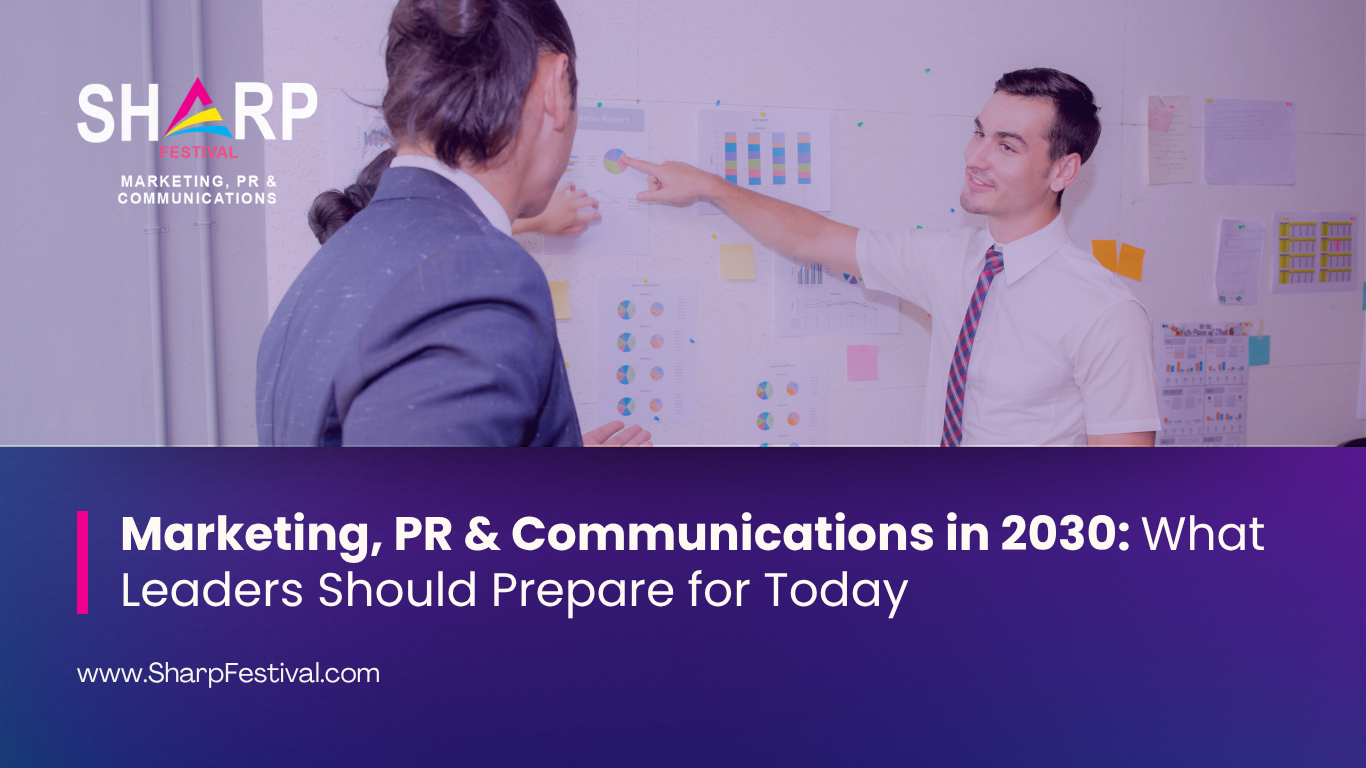
Marketing, PR and Communications in 2030: Trends, Skills and Strategies Leaders Need to Prepare For
Marketing, public relations and corporate communications are entering one of the most significant periods of transformation in their history. The way organisations connect with audiences, build trust and create value is changing rapidly, driven by advances in artificial intelligence, shifting consumer expectations and a growing demand for transparency.
By 2030, marketing will look very different from the traditional models many organisations still rely on today. Artificial intelligence will become deeply integrated into everyday marketing operations, customer expectations will continue to evolve and businesses will face increasing pressure to communicate with greater responsibility and authenticity.
However, the future of marketing and communications will not be defined by technology alone.
The organisations that succeed will be those that understand how to combine innovation with human insight. They will use AI and data to improve decision-making, increase efficiency and create more relevant experiences, while continuing to invest in creativity, trust and meaningful relationships.
For marketing and communications leaders, preparing for the future cannot wait until 2030. The changes shaping the industry are already happening today.
The organisations that will thrive in the coming years are those that begin developing the right capabilities now, from improving AI understanding and strengthening leadership skills to building teams that can adapt to constant change.
The future will belong to organisations that are prepared to evolve.
The Future of Marketing Will Combine Artificial Intelligence with Human Understanding
Artificial intelligence is already transforming how marketing teams operate. Organisations are using AI to support content creation, analyse customer behaviour, optimise campaigns, improve customer service and identify new opportunities through data.
By 2030, these capabilities are expected to become even more advanced. Marketing teams will have access to technology that can process complex information, predict customer needs and create highly personalised experiences at a scale that was previously impossible.
However, the increasing role of AI does not mean marketing professionals will become less important. Instead, it will change the skills and responsibilities expected from them.
As technology takes over more repetitive tasks, marketers will have more opportunities to focus on areas where human expertise creates the greatest value: strategic thinking, creativity, decision-making and relationship building.
The most successful marketing leaders of the future will not simply be those who understand how to use technology. They will be those who understand when and why technology should be used.
AI can identify patterns and provide insights, but it cannot fully understand human emotions, cultural shifts or the deeper motivations behind customer decisions.
Marketing has always been about understanding people.
That principle will remain at the centre of the industry, regardless of how advanced technology becomes.
Artificial Intelligence Will Become a Core Capability for Marketing Teams
By 2030, artificial intelligence will no longer be viewed as an additional tool or a specialised area of expertise. It will become a fundamental capability expected across marketing and communications teams, similar to how digital marketing skills became essential over the past two decades.
The challenge for organisations will not simply be gaining access to AI technology. Most companies will have access to similar platforms and solutions.
The real difference will come from how effectively teams use these tools to support business goals.
Future marketing professionals will need to understand not only how AI works, but also how to apply it responsibly and strategically.
Key areas of AI understanding will include:
- Using AI to improve campaign planning and audience analysis
- Evaluating the accuracy and reliability of AI-generated information
- Maintaining brand voice and consistency when using automated tools
- Understanding responsible data management and privacy considerations
- Balancing automation with creativity and human judgement
Organisations that successfully combine AI capabilities with strong strategic thinking will have a significant advantage.
Technology will improve efficiency, but human expertise will determine how effectively that technology creates value.
Brand Trust Will Become One of the Most Valuable Business Assets
As communication becomes faster and information becomes easier to access, trust will become one of the most important factors influencing business success.
By 2030, organisations will operate in an environment where every decision, statement and action can quickly become part of a wider public conversation. Customers, employees, investors and communities will continue to evaluate businesses based on what they do, not only what they say.
This will make brand reputation and trust even more valuable.
Marketing and communications leaders will play an increasingly important role in helping organisations build credibility, manage expectations and maintain strong relationships with stakeholders.
Audiences will expect greater transparency around areas such as:
- Artificial intelligence and data usage
- Sustainability commitments
- Corporate responsibility
- Leadership decisions
- Business practices and values
Traditional marketing messages alone will no longer be enough.
Organisations will need to prove that their communication reflects genuine actions and meaningful commitments.
The strongest brands will understand that reputation cannot be created through campaigns alone. It is built through consistent behaviour, responsible decisions and the experiences people have with an organisation over time.
This shift will also expand the role of marketing and communications professionals. Instead of focusing only on external messaging, they will become strategic advisors helping organisations understand stakeholder expectations and communicate effectively during periods of change.
Public Relations Will Become More Strategic and Integrated
The role of public relations has already expanded far beyond traditional media relations. While relationships with journalists and media organisations will remain important, the future of PR will involve a much broader responsibility for reputation, trust and organisational communication.
By 2030, public relations professionals will become even more closely connected with business strategy and leadership decision-making.
They will help organisations understand public expectations, identify potential risks and communicate effectively with different stakeholder groups.
The future of PR will involve areas such as:
- Reputation management
- Crisis preparedness and response
- Leadership communication
- Stakeholder engagement
- Corporate storytelling
- Public trust strategy
As organisations face greater visibility and increased scrutiny, PR professionals will become essential advisors rather than simply communication specialists.
Future PR leaders will need to combine traditional communication expertise with a broader understanding of business strategy, data analysis, digital platforms and organisational challenges.
Strong media relationships will continue to matter, but influence will become the defining measure of successful public relations.
The future of PR will not simply be about gaining attention.
It will be about building credibility.
The Customer Experience Will Become the Brand Experience
By 2030, the relationship between marketing and customer experience will become even more closely connected. Customers do not experience organisations through separate departments. They experience one complete brand, from the first advertisement they see to the customer service they receive, the digital platforms they use and the way an organisation communicates during important moments.
This means the traditional separation between marketing, customer experience, operations and communications will continue to disappear.
A successful marketing campaign creates expectations, but the customer experience determines whether those expectations are fulfilled. A company’s reputation is influenced not only by what it says publicly, but also by how easy it is to interact with the brand, how problems are resolved and whether customers feel understood.
Future marketing leaders will need to work more closely with teams across the organisation, including customer experience, product development, technology and operations. Creating consistent experiences across every touchpoint will become a key factor in building customer loyalty.
Artificial intelligence will play an important role in this transformation. AI will help organisations analyse customer behaviour, predict needs and create more personalised interactions. Businesses will be able to understand audiences in greater detail and deliver experiences that feel more relevant.
However, personalisation will also require responsibility.
Customers increasingly value experiences that are useful and convenient, but they also expect transparency and control over how their information is collected and used.
The challenge for organisations will be finding the right balance between relevance and respect.
Technology can make experiences more personalised.
Trust will determine whether customers welcome that personalisation.
Data Will Shape Decisions, But Insight Will Create Advantage
Data has already changed the way organisations approach marketing. Today, teams can measure campaign performance, analyse customer behaviour, monitor online conversations and understand market trends in ways that were impossible in the past.
By 2030, the amount of available information will continue to grow. Artificial intelligence will allow organisations to process and analyse data faster, helping teams identify patterns and opportunities more efficiently.
However, the biggest challenge for future marketing leaders will not be collecting more data.
It will be understanding what that data actually means.
Having access to information does not automatically create better decisions. Organisations need professionals who can interpret insights, understand customer motivations and connect data with wider business objectives.
High-performing marketing teams will move beyond simply reporting numbers. They will use data to answer deeper questions:
- Why are customers behaving in a certain way?
- What influences purchasing decisions?
- How are expectations changing?
- Where can the organisation create more value?
The future of marketing will not belong to companies that collect the most information.
It will belong to those that understand how to use information effectively.
Data can reveal what people do, but it does not always explain why they do it.
Understanding emotions, cultural changes and human behaviour will remain essential. The strongest teams will combine analytical skills with creativity, curiosity and strategic thinking.
By 2030, successful marketing professionals will need to be comfortable working with both numbers and narratives.
They will need to transform data into insights and insights into meaningful communication.
Human Skills Will Define the Best Marketing Leaders
As technology becomes more advanced, human skills will become increasingly valuable.
Artificial intelligence can support analysis, automate processes and generate content, but it cannot replace the qualities that define effective leadership: empathy, creativity, critical thinking and the ability to inspire others.
The marketing leaders of 2030 will operate in an environment of constant change. They will need to make decisions while facing uncertainty, guide teams through transformation and balance competing priorities.
Leadership will require more than technical knowledge.
It will require the ability to understand people.
Future marketing leaders will need to develop capabilities such as:
- Strategic business thinking beyond marketing objectives
- The ability to build adaptable and resilient teams
- Strong communication with senior stakeholders
- The confidence to make ethical decisions around technology and data
- The ability to encourage creativity while maintaining accountability
- A commitment to continuous learning and professional development
The strongest leaders will not focus only on achieving immediate results. They will build teams and capabilities that allow organisations to remain successful over the long term.
Marketing leadership in 2030 will be less about managing campaigns and more about creating the environment where people, technology and ideas can work together effectively.
Communications Teams Will Become Central to Organisational Strategy
Corporate communications has traditionally focused on managing messaging, supporting reputation and helping organisations communicate with internal and external audiences.
However, by 2030, communications teams will play an even more strategic role within organisations.
The speed at which information spreads means businesses must be prepared to communicate clearly during both opportunities and challenges. A leadership decision, customer concern or operational issue can quickly become a reputational matter.
This means communication professionals will need to be involved earlier in decision-making processes.
Their role will not simply be to respond after an issue appears. They will help organisations anticipate challenges, understand stakeholder expectations and develop communication strategies before risks become problems.
Future communications leaders will need to combine traditional expertise with a broader understanding of areas such as:
- Digital reputation management
- Artificial intelligence and emerging technologies
- Crisis communication
- Stakeholder engagement
- Brand strategy
- Internal communication
- Employee experience
Internal communication will become particularly important as organisations become more complex and workplaces continue to change.
Employees need clear, consistent and transparent communication from leadership. A strong external reputation begins with a strong internal culture.
When employees understand an organisation’s direction, values and decisions, they are more likely to support the brand and contribute positively to its reputation.
Building Future-Ready Marketing and Communications Teams
Preparing for 2030 requires organisations to rethink how they build, develop and support their teams.
The future marketing function will not depend on one specific skill or one type of professional. Instead, successful organisations will need teams that combine different areas of expertise, including technology, creativity, strategy, communication and business understanding.
The most effective organisations will focus on adaptability.
Technical skills will be important, but the ability to learn, collaborate and respond to change will become equally valuable.
Future-ready teams will need to understand:
- How artificial intelligence can improve marketing performance
- How changing customer expectations influence strategy
- How reputation is built and protected
- How data can support better decisions
- How communication contributes to wider business success
However, preparing for the future is not only about developing individual skills.
It is also about creating the right organisational culture.
Innovation happens when teams feel comfortable experimenting, sharing ideas and challenging existing approaches. Organisations that encourage curiosity and continuous improvement will be better prepared for future changes.
The companies that succeed by 2030 will be those that treat learning as an ongoing process rather than a one-time investment.
What Should Marketing and Communications Leaders Do Today?
Although 2030 may seem like a distant future, many of the changes that will define the next decade are already shaping the industry today. Organisations that want to remain competitive cannot wait until new technologies become standard or customer expectations completely change.
The most successful leaders will be those who begin preparing now.
The first priority should be developing a stronger understanding of artificial intelligence and how it can support business objectives. Organisations do not need to adopt every new technology immediately, but they do need to understand how AI is changing marketing, communications and customer behaviour.
Leaders should focus on identifying where technology can create genuine value rather than introducing tools simply because they are available.
The second priority should be investing in people.
Technology alone does not create successful marketing and communications teams. Organisations need professionals who can combine digital confidence with creativity, strategic thinking, communication skills and the ability to understand audiences.
Continuous learning will become one of the most important advantages for both individuals and organisations.
Future-focused teams will need opportunities to develop new skills, experiment with emerging technologies and stay informed about changes across the industry.
The third priority should be strengthening collaboration.
Marketing, public relations, corporate communications, customer experience and leadership teams can no longer operate separately. The challenges organisations face today are interconnected, and solving them requires different perspectives working together.
Strong collaboration allows organisations to create more consistent customer experiences, respond more effectively to challenges and make better strategic decisions.
Finally, leaders must continue focusing on trust.
As artificial intelligence creates more opportunities for personalised communication and automation, authenticity will become even more valuable.
Customers will increasingly distinguish between organisations that use technology to create meaningful experiences and those that rely on automation without considering the human impact.
The organisations that succeed in 2030 will not simply be those that communicate more frequently.
They will be those that communicate with credibility, purpose and a genuine understanding of their audiences.
The Future of Marketing, PR and Communications at SHARP Festival 2027
The changes shaping 2030 are already influencing the decisions marketing and communications professionals are making today.
SHARP Festival of Marketing, PR and Communications 2027 brings together industry leaders, marketing professionals, PR specialists, corporate communicators, brand strategists and business decision-makers to explore the trends and challenges defining the future of the industry.
The festival provides a platform for professionals to exchange ideas, share experiences and explore how organisations can prepare for the next stage of marketing and communications transformation.
Through expert-led sessions, industry discussions and professional networking opportunities, SHARP Festival will explore key themes including:
- Artificial intelligence in marketing
- Future marketing strategies
- The evolution of public relations
- Brand reputation management
- Crisis communication
- Marketing leadership
- Digital transformation
- Customer experience and engagement
- The future of corporate communications
As the industry continues to evolve, professionals need opportunities to understand what is changing, learn from industry experts and develop strategies that prepare them for the future.
SHARP Festival creates a space where marketing and communications leaders can discuss emerging challenges, exchange knowledge and explore the skills that will define success in the years ahead.
Join marketing, PR and communications professionals in London to explore the future of the industry and discover the strategies shaping 2030.
Reserve your seat for SHARP Festival of Marketing, PR and Communications 2027.
Discover more about the festival, speakers, and programme updates at SHARP Festival
Frequently Asked Questions:
What will marketing look like in 2030?
Marketing in 2030 will be shaped by artificial intelligence, advanced data analysis, personalised customer experiences and stronger connections between marketing, communications and business strategy. Human creativity, trust and strategic thinking will remain essential.
How will AI affect marketing and communications by 2030?
AI will become a core capability within marketing and communications teams, supporting research, automation, content creation, customer insights and decision-making. Professionals will remain responsible for strategy, ethics, creativity and applying human judgement.
What skills will marketing leaders need in 2030?
Future marketing leaders will need strategic thinking, AI literacy, data interpretation, creativity, communication skills, leadership ability and the capacity to adapt to continuous change.
How will public relations change in the future?
Public relations will continue moving beyond media relations towards a broader strategic role involving reputation management, stakeholder engagement, crisis communication and leadership advisory.
Why will brand reputation become more important by 2030?
As information spreads faster and audiences become more aware of organisational behaviour, trust will become a key factor influencing customer decisions, employee engagement and stakeholder relationships.
How can organisations prepare for future marketing trends?
Organisations can prepare by investing in employee development, understanding emerging technologies, strengthening collaboration between departments and creating strategies based on trust, innovation and adaptability.
Why should professionals attend marketing and communications events?
Marketing and communications events provide opportunities to learn from industry leaders, discover emerging trends, develop professional skills and build relationships with others shaping the future of the industry.