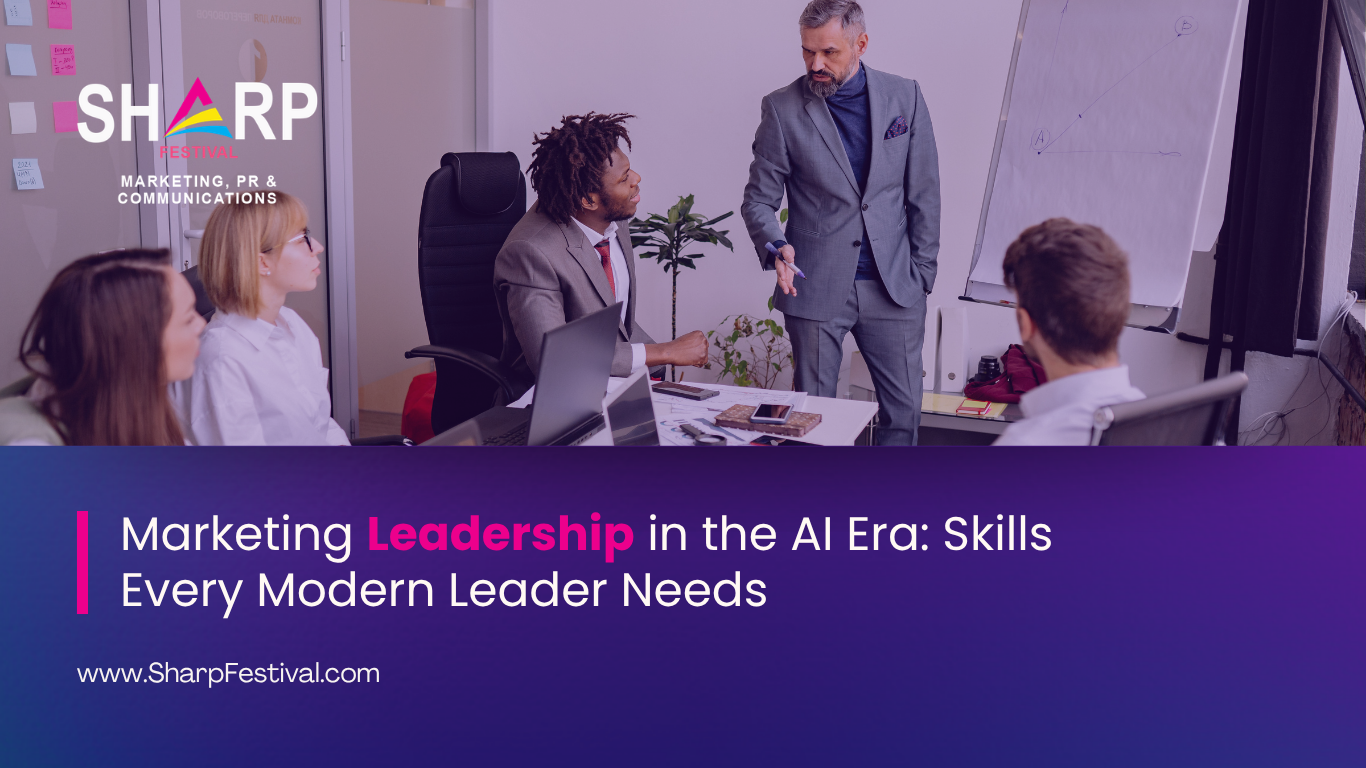
Marketing Leadership in the AI Era: Skills Every Modern Leader Needs
Marketing Leadership in the AI Era: Skills Every Modern Leader Needs
Artificial intelligence is transforming marketing at a pace few technologies have matched before. From analysing customer behaviour and improving campaign performance to automating processes and enabling more personalised experiences, AI is changing how organisations understand audiences and deliver value.
However, the impact of artificial intelligence goes far beyond technology and operational efficiency. It is also changing the expectations placed on marketing leaders.
In the past, successful marketing leadership was often associated with creativity, campaign execution and brand growth. Today, leaders must combine those capabilities with technological understanding, data-driven decision-making, change management skills and the ability to guide teams through constant transformation.
The rise of AI does not reduce the importance of leadership. Instead, it makes strong leadership more essential than ever.
As technology takes over more routine and repetitive tasks, organisations need marketing leaders who can think strategically, understand complex challenges and make decisions that balance innovation with customer trust.
The future of marketing leadership will belong to those who can combine artificial intelligence with creativity, commercial awareness and human judgement.
The organisations that succeed will not necessarily be those using the most advanced AI solutions. They will be the ones led by professionals who understand how technology can support meaningful business outcomes while maintaining authenticity, originality and strong customer relationships.
Marketing Leadership Is Becoming More Strategic
Marketing has always played an important role in understanding customers and driving business growth. However, the role of marketing leaders has expanded significantly as organisations increasingly recognise the connection between marketing, customer experience, reputation and commercial performance.
Today’s marketing leaders are expected to contribute to wider business decisions, influence organisational direction and demonstrate how marketing activity creates measurable value.
Artificial intelligence provides access to deeper customer insights, predictive analytics and faster decision-making. However, technology alone cannot determine which opportunities align with an organisation’s purpose, values or long-term goals.
This means marketing leaders must develop a broader understanding of business strategy.
They need to understand how marketing influences revenue growth, customer relationships, brand reputation and organisational success.
AI can provide information and identify patterns. Leadership determines how that information is used.
AI Literacy Will Become an Essential Leadership Capability
Marketing leaders do not need to become AI developers or technical specialists. However, they do need enough understanding to evaluate opportunities, ask the right questions and make informed decisions about how technology should be implemented.
AI literacy allows leaders to understand both the potential and limitations of artificial intelligence.
Modern marketing leaders should have a strong understanding of areas such as AI-supported campaign planning, content creation, customer segmentation, personalisation, predictive analytics, automation, data governance and ethical considerations.
This knowledge enables leaders to move beyond simply adopting new tools because they are available.
The most successful organisations will not be those that use AI everywhere. They will be those that identify where technology can create genuine value while maintaining strategic oversight and human control.
Human Judgement Will Become a Competitive Advantage
Artificial intelligence can analyse information, generate ideas and automate processes, but it cannot replace human judgement.
Marketing leadership requires decisions that involve context, emotional intelligence, ethics and a deep understanding of customers.
Leaders must consider questions that technology cannot fully answer:
- Does this campaign reflect our brand values?
- How will customers interpret this message?
- Could this decision create reputational risks?
- Does this approach support our long-term strategy?
AI can provide recommendations, but leaders remain responsible for the decisions they make.
As automation becomes more common, the ability to apply critical thinking and make responsible choices will become one of the most valuable leadership skills.
Technology improves efficiency. Human judgement creates trust.
Data Literacy Will Drive Better Marketing Decisions
Modern marketing teams have access to an unprecedented amount of data. Customer behaviour, campaign results, digital interactions and market trends provide valuable insights into what audiences need and how they respond.
Artificial intelligence can help organisations process this information faster, identify patterns and predict future behaviour.
However, data only becomes valuable when leaders understand how to interpret it.
Successful marketing leaders must move beyond simply reviewing reports and dashboards. They need to identify meaningful insights, understand business implications and use information to guide strategic decisions.
Strong data literacy allows leaders to:
- Identify new market opportunities
- Improve customer experiences
- Make smarter investment decisions
- Measure marketing effectiveness
- Demonstrate marketing’s contribution to business growth
The future of marketing leadership will depend on combining analytical thinking with strategic vision.
Creativity Will Remain a Defining Leadership Skill
As artificial intelligence becomes increasingly accessible, one of the biggest misconceptions is that creativity will become less important.
In reality, creativity may become even more valuable.
When organisations use similar AI platforms and tools, there is a risk that marketing content becomes less distinctive. Technology can help produce ideas faster, but it does not automatically create original perspectives or meaningful brand stories.
Marketing leaders will need to create environments where creativity and technology work together.
AI can support research, improve efficiency and accelerate production. However, human creativity remains essential for developing unique ideas, emotional connections and memorable brand experiences.
In an AI-driven world, originality becomes a powerful competitive advantage.
Communication and Influence Will Define Effective Leaders
Marketing leadership has never been based only on technical knowledge. Successful leaders must also communicate clearly, build relationships and influence decisions across an organisation.
AI transformation often requires significant changes in how teams work. Leaders must help employees understand why new technologies are being introduced, how they support business goals and what impact they will have on daily processes.
Clear communication helps reduce uncertainty and creates confidence during periods of change.
Marketing leaders who can connect technology with people are better positioned to build support, encourage collaboration and create successful transformation.
Ethical Leadership Will Shape Brand Trust
Artificial intelligence creates enormous opportunities, but it also introduces new responsibilities.
Customers increasingly expect organisations to use technology responsibly and transparently. Poor decisions around AI can create significant risks for reputation and trust.
Marketing leaders must consider important issues such as data privacy, customer protection, AI bias, transparency and the accuracy of AI-generated information.
The question is no longer only whether AI can improve efficiency.
The more important question is whether AI is being used in a way that strengthens relationships with customers and stakeholders.
Responsible technology leadership will become a defining factor in building long-term trust.
Collaboration Will Define High-Performing Marketing Teams
Marketing is becoming increasingly connected with every part of an organisation.
Modern marketing leaders work alongside sales teams, product specialists, customer experience professionals, HR departments, technology teams and corporate communications functions.
AI strengthens this need for collaboration because successful implementation requires alignment between different areas of expertise.
Future marketing leaders will need to build strong relationships across departments, encourage knowledge sharing and create strategies that support consistent customer experiences.
The strongest organisations understand that marketing success depends on collaboration, not isolated departmental performance.
Continuous Learning Will Become a Leadership Requirement
The speed of technological change means marketing leaders must commit to continuous development.
New AI capabilities, digital platforms and customer expectations are constantly emerging. Leaders who stop learning risk losing their competitive advantage.
Future-focused marketing professionals will need to continue developing their knowledge of AI trends, consumer behaviour, leadership practices, data analytics, reputation management and communication strategies.
Learning is no longer simply a personal development goal. It is a requirement for effective leadership.
The Future of Marketing Leadership Will Remain Human
Artificial intelligence will continue to transform marketing, but the qualities that define great leaders will remain centred around human capabilities.
The strongest marketing leaders will understand how to combine technology with empathy, data with creativity and automation with human understanding.
Leadership has never been about having every answer. It is about asking better questions, making thoughtful decisions and helping organisations navigate change successfully.
The future belongs to leaders who understand both technology and people.
Preparing Marketing Leaders for the Future
The AI era is creating new opportunities for marketing professionals, but it is also raising expectations of leadership.
Organisations need leaders who understand technology without becoming dependent on it. They need professionals who can analyse information, develop innovative strategies, inspire teams and protect customer trust.
The future of marketing leadership will not be defined by artificial intelligence alone.
It will be defined by how effectively leaders combine AI capabilities with creativity, commercial thinking, ethical decision-making and strong communication.
Technology will continue to evolve.
The importance of human leadership will continue to grow.
Explore the Future of Marketing Leadership at SHARP Festival 2027
SHARP Festival of Marketing, PR and Communications 2027 brings together marketing leaders, communications professionals, brand strategists, PR specialists and business decision-makers to explore the future of leadership, innovation and transformation.
Through expert-led sessions, industry discussions and professional networking opportunities, SHARP Festival examines the role of artificial intelligence in marketing, digital transformation, leadership development, customer engagement and the changing responsibilities of modern marketing professionals.
Join industry experts and professionals in London to explore the skills, strategies and insights that will define successful marketing leadership in the years ahead.
Reserve your seat for SHARP Festival of Marketing, PR and Communications 2027.
Discover more about the festival, speakers, and programme updates at SHARP Festival
Frequently Asked Questions:
What skills do marketing leaders need in the AI era?
Modern marketing leaders need strategic thinking, AI literacy, data interpretation, creativity, communication, commercial awareness, ethical decision-making and leadership skills to guide organisations through technological change.
How is AI changing marketing leadership?
AI is changing marketing leadership by automating routine tasks, improving data analysis and supporting decision-making. Leaders remain responsible for strategy, creativity, customer relationships and business outcomes.
Will AI replace marketing leaders?
No. AI supports marketing leaders by improving efficiency and providing insights, but leadership requires judgement, empathy, communication and accountability that technology cannot replace.
Why is AI literacy important for marketing professionals?
AI literacy helps professionals understand how artificial intelligence works, evaluate new technologies, identify opportunities and make informed strategic decisions.
Why are leadership skills becoming more important in marketing?
As technology handles more operational work, leaders spend more time guiding teams, influencing strategy, managing change and building customer trust.
How can marketing professionals prepare for the future?
Marketing professionals should develop AI knowledge alongside leadership, communication, strategic thinking, data literacy and commercial awareness to remain competitive.
Why should professionals attend marketing leadership events?
Marketing leadership events provide access to expert insights, industry trends, practical case studies and networking opportunities that help professionals strengthen their leadership capabilities and prepare for future challenges.